Teaching Areas
Art History Surveys
Architectural History Surveys
Survey of Italian Art & Architecture
Italian Renaissance Art & Architecture
Italian Baroque Art & Architecture
History & Culture of Southern Italy
Early Modern Islamic Art & Architecture
Introduction to Digital Art History
Teaching Philosophy
The fundamental principle that drives my teaching is that the skills required to look at, describe, and analyze art are often new and challenging modes of thinking for undergraduates in survey-level art history courses. In my teaching at Penn State, my students hail from diverse backgrounds and disciplines and therefore bring a variety of skill sets to bear on course material. With this in mind, I see studying art history as an opportunity to build essential new skills that are transferable across disciplines.
My courses offer opportunities to practice looking, thinking, and talking about art. In a lecture format, and in conjunction with assigned readings, I establish the cultural and historical framework for understanding the art objects and monuments. I pair illustrative storytelling that centers historical concepts and themes with open classroom discussion of individual art objects and monuments. In my lectures I demonstrate the appropriate vocabulary for art analysis that students will employ in discussion and in their written assignments. Following several lectures in which I established a strong historical framework, I shift my classroom instruction into a seminar format with an object-focused approach in which I ask students to describe and discuss what they see. Very often, the formulaic lecture format prevents student contributions. I encourage students to feel comfortable contributing by creating openings for low-stakes discussion, making comparisons to contemporary media formats, or even introducing levity with my own observations. These take a variety of formats in order to reach students with a varying learning styles, including small group discussions, classroom debates, and short-form written responses to warm-up questions at the start of class. In this way, I break down the dominant perception that art history is inaccessible or elitist. I create an environment where students are allowed to make mistakes, ask questions, and develop the vocabulary of visual analysis. As the discussion progresses, I ask students to think critically about artworks in their historical and cultural contexts and to consider concepts of patronage, materials, workshop and making practices, and social history of diverse groups and audiences. This strategy builds students’ confidence in their ability to describe and analyze visual evidence in conjunction with the historical and cultural contexts. I assess these skills by assigning written reading responses and in-person written assessments that ask students to synthesize historical context and visual analysis.
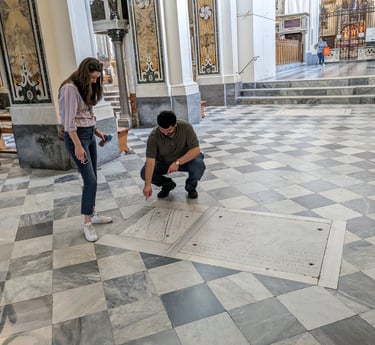
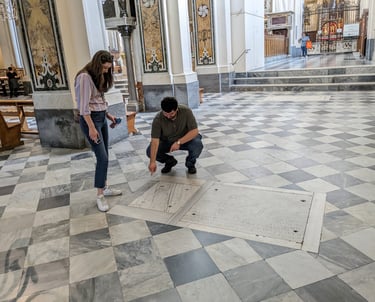
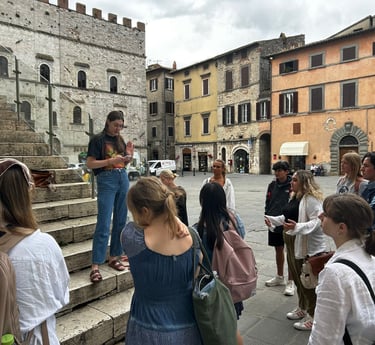
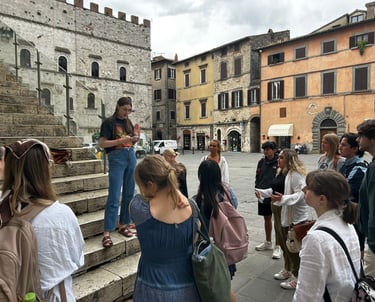
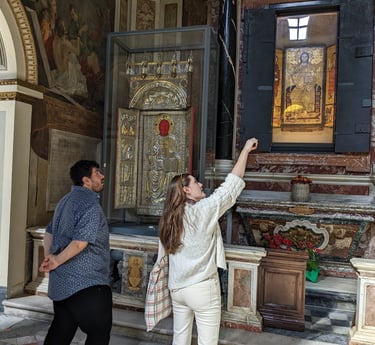
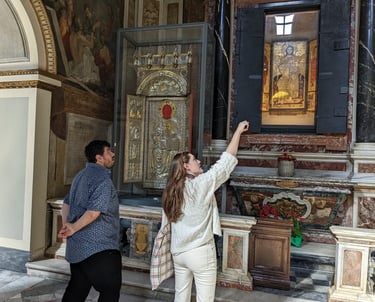
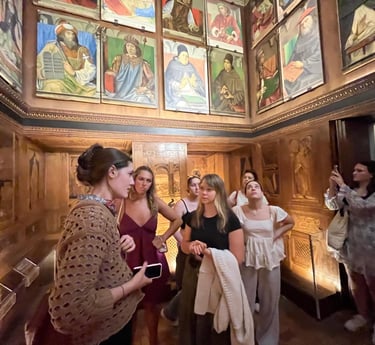
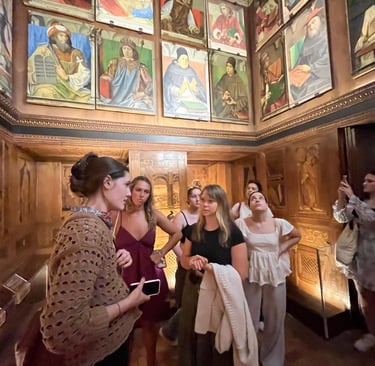
Assignments in my courses are an extension of this heuristic approach. In my study abroad courses, for example, I have found success with a visual analysis essay assignment in which I facilitate visits to local galleries and museums. Students are instructed to choose a work of art in the gallery and to engage in prolonged, patient looking at the art object. This strategy is informed by Dr. Jennifer L. Roberts’s contribution to the 2013 Harvard Initiative for Learning and Teaching conference. The result of their decelerated attention to the visual is an essay in which they apply the vocabulary of visual analysis to their chosen artwork. This assignment is easily transferrable to the home campus, where campus museums, galleries, and libraries offer robust collections and opportunities for in-person study. Another assignment in my study abroad courses takes advantage of our setting to encourage direct engagement with the art objects we study in the classroom. Students practice the research skills of an art historian to prepare an on-site presentation. In conjunction with our travel itinerary, study abroad students choose the object of their project and conduct research using digital library resources. This assignment introduces undergraduate students to responsible academic research practices and allows them to take ownership of their learning and contribute to the course content. While on-site, students make a brief presentation that challenges them to make connections between the historical context and the visual evidence. Students report that these activities challenge their habitual modes of thinking and provide an opportunity to share the results of their hard work with their peers.
My goal, whether teaching in the university classroom or on-site during study abroad, is to demonstrate the transferability of the essential skills of the art historian – visual analysis and critical thinking about historical objects – and to produce students that confidently think, speak, and write about what they see.